




Frequently Asked Questions
What GMP compliance considerations apply when procuring a laboratory freeze dryer for pharmaceutical or biotech applications in Australia?
For GMP-regulated pharmaceutical and biotech applications, freeze dryers must meet specific qualification requirements. Key considerations include: FDA 21 CFR Part 11 compliance for electronic batch records, IQ/OQ/PQ qualification support, material traceability documentation (product contact materials), CIP/SIP compatibility, audit trail capability in the control system, and conformity with EU Annex 1 or TGA manufacturing guidelines where applicable. Ezzi Vision can advise on which VACO series models meet these requirements and provide qualification documentation packages.
What is the typical capital and operating cost of a laboratory freeze dryer for a research institution in Australia?
Laboratory freeze dryer capital costs in Australia typically range from AUD $8,000-$25,000 for entry-level benchtop VACO series units to $50,000-$150,000 for pilot-scale units with advanced control systems. Operating costs include: electrical consumption (typically 1-3 kW continuous), refrigerant maintenance, vacuum system servicing, and consumables. Ezzi Vision can provide a detailed cost-of-ownership analysis for your selected model to support capital expenditure justification.
Can Ezzi Vision support the IQ/OQ qualification process for a freeze dryer installation in a regulated laboratory?
Yes. Ezzi Vision provides qualification support packages for laboratory freeze dryer installations in GMP-regulated environments. This includes: manufacturer documentation (technical data sheets, CE declarations, material certificates), installation qualification (IQ) checklists, operational qualification (OQ) test protocols with acceptance criteria, and calibration records for critical instruments (temperature sensors, vacuum gauges). Contact their team to discuss a documentation package appropriate for your regulatory framework.
What batch capacity freeze dryers are available for scale-up from laboratory to pilot-scale in pharmaceutical development?
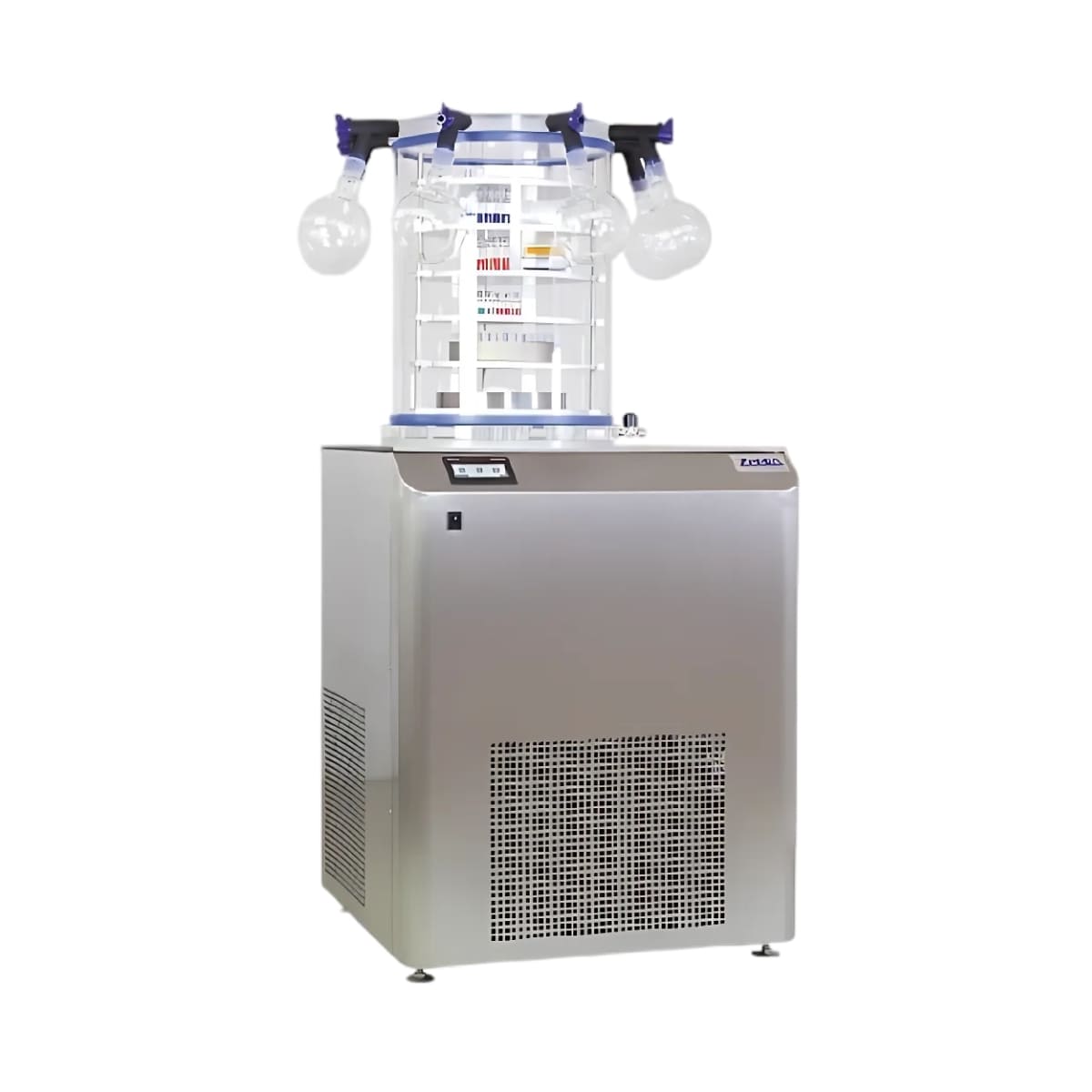
Ezzi Vision's VACO series covers a range of batch capacities from small benchtop units (suitable for vial batches of 50-200 vials) through to pilot-scale units handling larger tray configurations. For pharmaceutical development scale-up, they can advise on the appropriate intermediate capacity that replicates laboratory cycle parameters at pilot scale - a critical requirement for transferring freeze-drying cycles into clinical production.
What after-sales service and preventive maintenance support does Ezzi Vision provide for freeze dryers in research institutions?
Ezzi Vision offers preventive maintenance programmes for VACO series freeze dryers covering: annual compressor service, vacuum system inspection and pump service, condenser and shelf inspection, temperature and vacuum sensor calibration, and control system software updates. Service visits can be scheduled to minimise disruption to laboratory operations. Service agreements are available for institutions requiring guaranteed response times.
How do I justify the capital expenditure for a laboratory freeze dryer to my institution's procurement committee?
A strong freeze dryer capex justification should include: quantification of sample preservation value (biological samples, APIs, rare materials), comparison with outsourced lyophilisation costs (contract freeze drying fees), productivity gains from in-house processing turnaround versus external service lead times, the range of research capabilities enabled, and equipment grant eligibility. Ezzi Vision can provide a formal quotation and product specification letter to support your internal business case and procurement committee submission.
Are VACO series freeze dryers compatible with organic solvents used in pharmaceutical formulation research?
Standard VACO series freeze dryers are designed for aqueous systems. For applications involving organic solvents (e.g. tert-butanol, ethanol/water mixtures common in pharmaceutical lyophilisation), specific condenser temperature, material compatibility, and solvent recovery considerations apply. Ezzi Vision can specify models with appropriate condenser temperatures and explosion-proof configurations where solvent vapour loads are involved.


Choose Ezzi Vision
Vacuum, Lithography, Thin-Film Experts
Experience top-tier repair and maintenance services for glovebox and vacuum equipment, backed by industry expertise across Australia.
Contact Us
Leading Expertise
30+ Years in Tech

Comprehensive Range
1600+ Products

Technical Support
Expert guidance

Lorem, ipsum dolor.
Lorem ipsum dolor sit.